What we teach.Grade by grade.
English language arts, math, science and social studies are taught from Kindergarten, alongside Arabic and Islamic studies.

Standards
The standards behind each subject.
The academic subjects at Huda Academy are taught to published standards, so families can see what their child is expected to learn in each subject and each year.
English and math
From Kindergarten through Grade 5, English language arts and math follow clear academic standards. These set out, grade by grade, what students should be able to read, write and work out by the end of each year.
Reading is taught from Kindergarten through its five parts: phonemic awareness, phonics, fluency, vocabulary and comprehension. Writing and grammar are taught step by step, and novel studies begin in Grade 3.
Math builds from one grade to the next, and students who are ready can move on to pre-algebra, algebra and geometry in the middle grades.
Science
Science lessons are hands-on, so experiments are part of the course, and students can take part in the science fair.
Social studies
In the elementary grades, social studies covers four strands: government, economics, geography and history. Current events are brought into lessons too.
Our UALR partnership
We have a partnership with the University of Arkansas at Little Rock (UALR). It includes a teacher resident program, professional development for our teachers, and concurrent enrollment, which lets high school students take college courses.
Physical education
PE is taught in our gymnasium.
High school
In high school, courses follow the Arkansas Department of Education’s graduation requirements, the same requirements public high schools follow. The Graduation Requirements page explains how that works.
How progress is measured
Teachers follow each student’s progress through the year. They use formative assessments, the quick checks built into everyday lessons, and summative assessments, the tests at the end of a unit. They are also how we decide when a student is ready to move ahead.
In the elementary grades, teachers also check reading and math skills regularly through the year.
Subjects by stage
What your child studies, stage by stage.
Every stage keeps the same core of subjects and adds to it as children grow, and faith and academic subjects share the same timetable from the first year.

Kindergarten
Seven subjects: Islamic studies, Arabic, English language arts, math, science, social studies and PE. Kindergarten is a full day, and classes are kept smaller than public schools can usually offer, so each child gets more of the teacher’s attention.
Grades 1 to 3
The same subjects continue, and salah is added to the timetable as a subject of its own. Grade 1 is also when students begin praying Dhuhr together at school and start Qira’ah, the study of Qur’an recitation.
Grade 4
Computer science joins the timetable, alongside PE, Arabic, Islamic studies, science, social studies, math, salah and English language arts.
Grades 5 to 9
Art is added, making ten subjects: Arabic, Islamic studies, PE, art, math, science, social studies, salah, English language arts and computer science. In these grades, students who are ready can also take advanced courses, described below.
Faith subjects
Islamic studies and Arabic, taught as real subjects.
 Islamic studies • Arabic • Qur’an
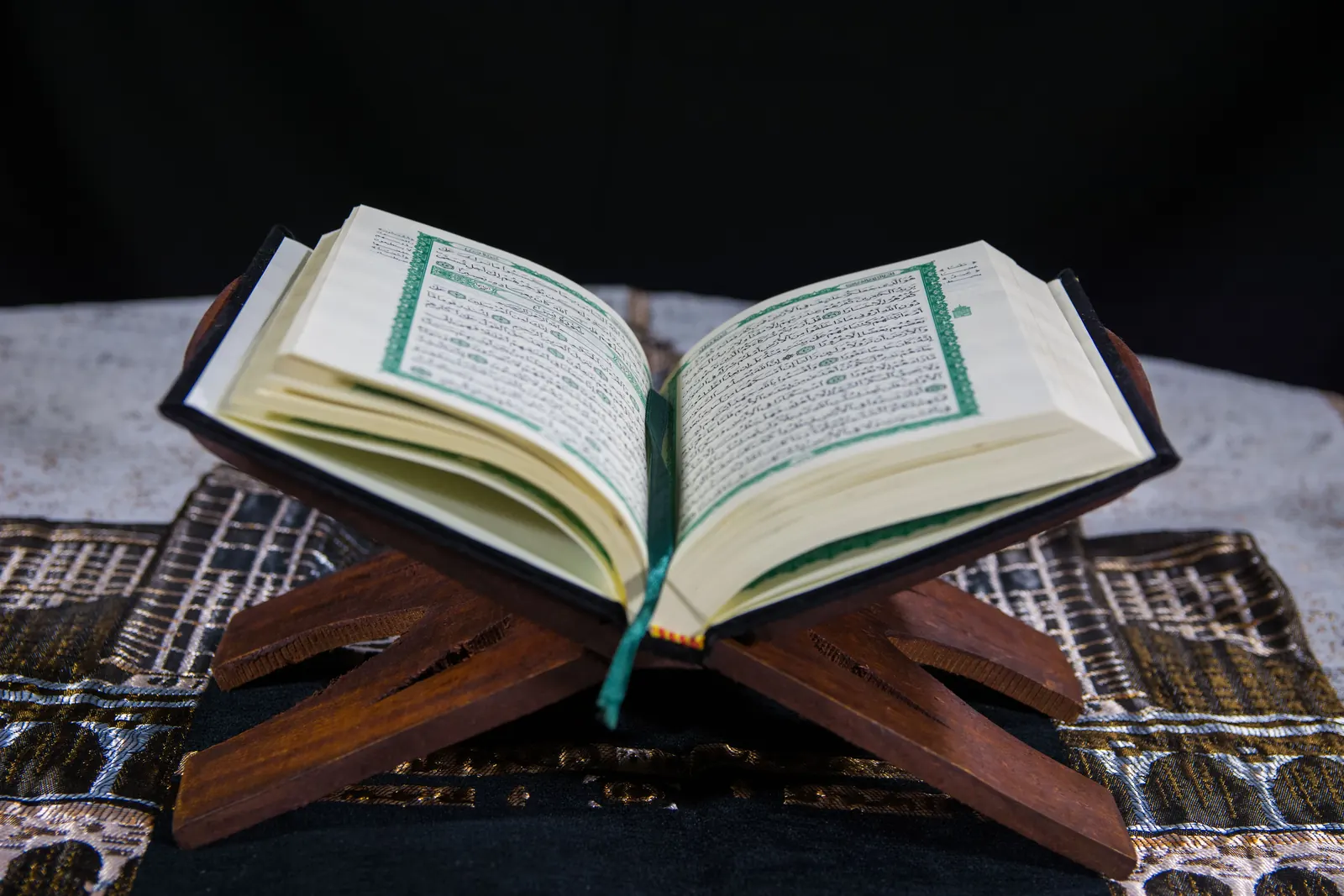
Islamic studies
Islamic studies is on the timetable from Kindergarten, taught as a subject with its own curriculum at each stage. The material grows with the child from elementary school through high school, where it is joined by the Ijazah program.
In high school, Islamic studies, Qur’an and Arabic are taught four times a week, and teachers follow the curriculum we provide.
Arabic
Arabic is taught in two forms. Modern Standard Arabic is taught as a language, for reading, writing and speaking. Qur’anic Arabic is used in the Qur’an and Qira’ah classes, where the aim is to read and recite the Qur’an correctly.
Arabic is a full subject from Kindergarten. As students grow, the focus widens to grammar and to understanding the message of the Qur’an.
Qur’an
Qira’ah begins in Grade 1. Each grade memorizes its own portion of the Qur’an over the year, and the teacher tracks every student’s progress. Several members of our staff are huffaz, and our Ijazah program is for high school students. The Qur’an and Hifz page explains the program in full.
Advanced courses
Room to move ahead when a student is ready.
Some students are ready for more before the rest of their grade is. In the middle grades, we offer advanced courses so those students keep being stretched instead of waiting.
Our advanced courses include pre-algebra, Algebra I and geometry in math, along with courses such as physical science and world history.
Teachers gather evidence about each student from everyday checks and end-of-unit tests. A student moves into an advanced course when the teacher’s record across the year shows they are ready.

The same record is watched for the opposite reason too. A teacher who sees a student struggling can bring in extra help early, through Response to Intervention. The Learning Support page describes those steps.
In high school, the stretch continues through advanced courses in English, math, science and social studies, and through concurrent enrollment with UALR, where a student can take college courses while still at Huda Academy.
The standards,
seen up close.


Nothing traded away
Rigor and faith, together.
Families should not have to choose between strong academics and Islamic learning, and here they do not.